A fridge rarely fails without warning. Most breakdowns start as small changes that are easy to ignore: a motor that runs a little longer, a few drops of water on the floor, ice cream that is softer than usual. In Abu Dhabi, where kitchens stay warm for most of the year, those small signs can turn into spoiled food and a much bigger repair within days. Here are the warning signs that mean your refrigerator needs attention now, what usually causes each one, and what you can safely check yourself.
1. The fridge feels warmer than it should
A fresh-food compartment should sit at about 3–5°C and a freezer at about −18°C. If milk spoils early or drinks are only cool, check that the thermostat dial has not been knocked and that nothing is blocking the air vents inside. If the settings are right and the fridge is still warm, the cause is often dirty condenser coils, a failing evaporator fan, a faulty thermostat or sensor, or low refrigerant gas.
2. The motor runs all the time
A compressor that never seems to switch off is working too hard. Dusty coils, a worn door seal or a fridge pushed tight against the wall can all cause it. If cleaning the coils and leaving a few centimetres of space behind the unit does not help, have a technician check the gas level and the thermostat before the compressor overheats.
3. Water on the floor or inside the fridge
Water usually comes from a blocked defrost drain, a cracked drain pan or, on models with a dispenser, a leaking water line or inlet valve. Wipe it up and look for the source. A blocked drain can sometimes be cleared with warm water, but a leaking valve or line needs a repair.
4. Frost or ice building up
Thick frost in a frost-free freezer points to a defrost fault: the heater, the defrost thermostat or the timer. It can also mean the door is not sealing. Run a sheet of paper along the seal: if it slides out easily with the door closed, the gasket is worn.
5. New or loud noises
Some humming is normal. Clicking, buzzing, grinding or rattling is not. A noisy fan motor, loose compressor mounts or a struggling start relay are common causes. Repeated clicking with no cooling often means the compressor is trying and failing to start.
6. A burning smell, hot sides or tripping power
If you smell burning plastic, the fridge trips the electricity or the cabinet feels unusually hot, unplug it and do not use it until it has been checked. These are electrical warning signs, not just performance problems.
7. An error code or flashing alarm
Modern Samsung, LG, Bosch and Siemens fridges show fault codes for sensors, fans and defrost problems. Note the code before you reset anything, because it tells the technician where to start.
What you can safely check yourself
- The temperature setting and that the plug and socket are working.
- That the door closes fully and the seal is clean and not torn.
- That the vents inside are not blocked by food.
- That there is space behind and above the fridge for air to move.
- That the condenser coils are not thick with dust (unplug the fridge first).
Do not open the sealed gas system, bypass a thermostat or repair wiring yourself. Refrigerant work needs proper tools and training.
When to call a technician
Call for help if the fridge stays warm after these checks, keeps tripping the power, leaks from somewhere you cannot find, or shows an error code that comes back after a reset. Acting early usually means a smaller repair and less wasted food.
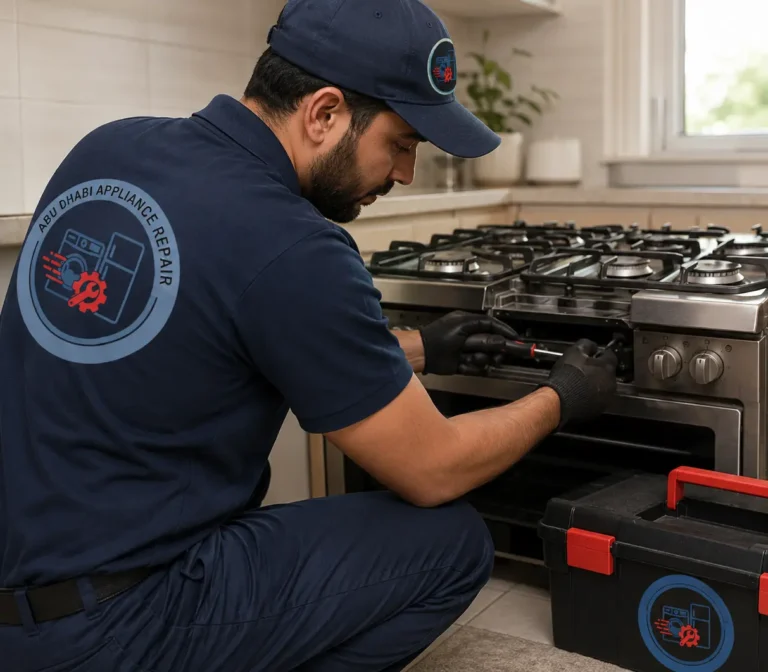
If you are in Abu Dhabi, Abu Dhabi Appliance Repair can send a technician to your home, 24/7 and usually the same day. Call 050 699 7974 or send a WhatsApp with the brand, model and what you have noticed, and you will get a clear price before any work starts.