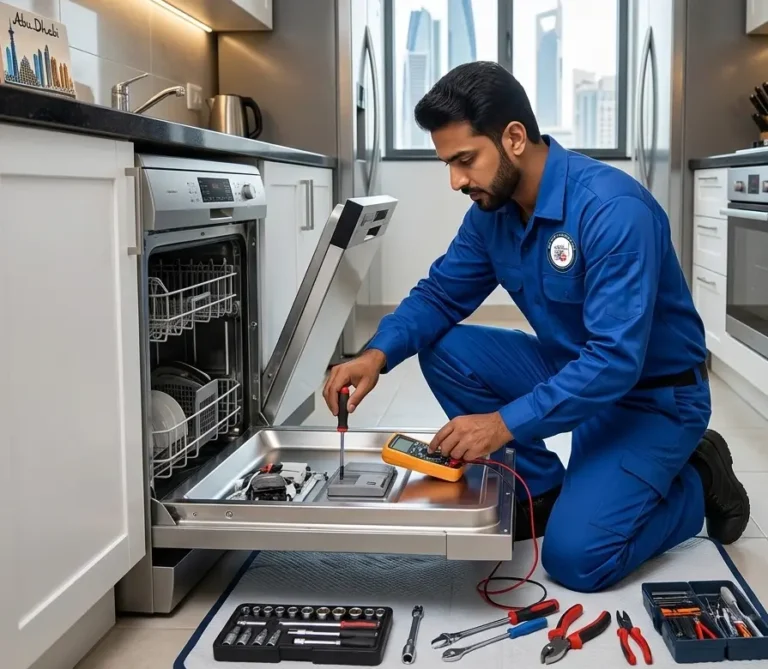
It’s the end of a long day. You open your dishwasher, expecting clean, dry dishes, only to find a pool of dirty water sitting at the bottom. A dishwasher not draining water is one of the most common and frustrating appliance problems, especially in homes across Abu Dhabi and the wider UAE.
The good news? In many cases, it’s a problem you can fix yourself without calling a technician. This complete guide, part of our appliance repair blog , will walk you through the causes, warning signs, and step-by-step solutions to get your dishwasher draining properly again. And when the problem is beyond a DIY fix, we’ll explain exactly when it’s time to call in the professionals at Abu Dhabi Appliance Repair .
What Is the Problem?
Simply put, a dishwasher that won’t drain fails to pump the dirty water out at the end of a wash or rinse cycle. Instead of flowing through the drain hose and into your kitchen plumbing, the water remains trapped inside the machine.
This issue isn’t just annoying—it also ruins your dishes and creates a breeding ground for bacteria and mold, leading to foul odors. This often results in error codes, particularly on modern machines, such as i20, C2, F2, or AL6, which tell you there is a problem with the drainage system. Understanding why your dishwasher is holding water is the first step to fixing it.
Common Causes of a Dishwasher Not Draining
There are several reasons why your dishwasher might be holding water. These problems can occur individually or combine to cause a complete blockage.
1. Blocked or Clogged Filter System
The dishwasher filter catches large food particles and debris to prevent them from re-circulating and redepositing on your dishes. Over time, this filter can become clogged with fat, grease, and food scraps, blocking water from draining through the pump.
2. Kinked, Damaged, or Incorrectly Installed Drain Hose
A dishwasher’s drain hose carries wastewater from the appliance to your sink’s drainpipe. If this hose is kinked, twisted, or crushed, it can restrict or completely stop the flow of water. A blocked or clogged sink spigot or pipe can also cause backups.
3. Clogged Drain Pump or Impeller
The drain pump is the motor that forces water out of the dishwasher. It’s possible for small objects like pieces of glass, plastic, bone, or toothpicks to get past the filter and become lodged in the pump impeller, causing the pump to jam and stop working.
4. The “Blanking Plug” (For New Installations)
This is a common mistake after a new installation or if the machine has been moved. The rubber or plastic blanking plug must be removed from the sink drain (the spigot) before connecting the dishwasher drain hose. If it’s left in place, water has nowhere to go.
5. High Mineral Content (UAE Hard Water)
The UAE’s tap water has a high mineral content (hard water). Over time, these minerals combine with grease and food particles to form a dense, stubborn buildup inside the hose and filter that’s harder to clear than in places with softer water.
if your dishwasher not draining water trust Abu Dhabi Appliance Repair.
Warning Signs Your Dishwasher Isn’t Draining Properly
If your dishwasher not draining water, knowing the early warning signs can save you from a complete breakdown:
- Standing Water: This is the most obvious sign. You open the door at the end of the cycle and see stagnant, dirty water at the bottom of the tub.
- Poor Cleaning Results: If your dishes are coming out with a film, residue, or food particles, it might be because the dirty water isn’t being properly drained away and is being recirculated.
- Unpleasant Odors: A sour or musty smell when you open the door is often caused by standing water and trapped food debris.
- Gurgling Sounds: Gurgling noises coming from the appliance during the wash or rinse cycle can indicate a partial restriction in the drain line.
- Error Codes: As mentioned, codes like i20, C2, F2, or AL6 are clear indicators of a drainage problem.
Step-by-Step Solutions to Fix a Dishwasher That Won’t Drain
Before you do anything, safety first: Unplug your dishwasher from the power outlet to avoid the risk of electric shock.
Step 1: Check the Filter
- Locate the filter (usually a cylindrical or flat mesh screen at the bottom of the dishwasher).
- Remove it and any food trap or glass trap underneath.
- Rinse it under warm, running water. Use an old toothbrush or a soft brush to remove stubborn debris.
- Make sure the sump area (where the filter sits) is also clean.
Step 2: Inspect and Clear the Drain Hose
- Pull the dishwasher out carefully to access the back.
- Visually inspect the hose for any kinks, twists, or sharp bends.
- If you find a kink, straighten it out and ensure the hose has a “high loop” near the machine to prevent backflow.
- Disconnect the hose from the sink drain and check for blockages. Be prepared with a bucket and towels to catch water. You can flush the hose with water or use a plumbing snake to remove a stubborn clog.
Step 3: Clear the Drain Pump
This step is a bit more complex and involves dealing with water.
- Remove the filter system to access the pump cover.
- Sponge out any standing water.
- Remove the plastic cover over the pump impeller.
- Carefully remove any foreign objects you find (glass, plastic, toothpicks, etc.).
- Reinstall the cover and the filter.
Step 4: Reset the Dishwasher (For Error Codes)
Sometimes, simply clearing an error code and resetting the machine can resolve a temporary glitch.
- For many modern dishwashers, you can press and hold the Cancel or Drain button for 3–5 seconds.
- This will usually start a drain cycle and clear the existing program.
- After the reset, start a new short cycle to see if the problem is fixed.
When to Call a Professional Repair Service
If you’ve worked through the steps above and your dishwasher is still not draining water, the problem is likely more serious. Here’s when to pick up the phone:
- The Drain Pump is Faulty: The pump itself may have burned out and needs a replacement.
- A Complex Blockage: The obstruction might be deep in the plumbing of your home, not just in the dishwasher’s components.
- The Problem Persists: If you’re seeing recurring clogs or error codes, it’s a sign of a chronic issue that needs professional diagnosis.
- You Are Not Comfortable Working on the Appliance: It’s always safer to call an expert if you’re unsure.
Don’t use harsh chemical drain cleaners. These products are corrosive and can damage the delicate hoses, seals, and pumps inside your dishwasher.
If you are in Abu Dhabi, Abu Dhabi Appliance Repair offers fast and reliable dishwasher repair services . Our certified technicians can diagnose and fix any drainage issue. We are an authorized service center for major brands and are ready to help you get your appliance back to its best.
Preventive Maintenance Tips For Dishwasher Not Draining Water
Prevention is always better than cure. These simple maintenance habits will help you avoid a dishwasher not draining issue in the future. For more expert advice, check out our other guides on the Abu Dhabi Appliance Repair Blog .
1. Scrape, Don’t Rinse
Scrape large food scraps off your plates before loading them into the machine. Your dishwasher is designed to handle small particles, not large leftovers.
2. Clean the Filter Regularly
This is a crucial step. Clean the filter every two to three weeks by rinsing it under the tap. It takes under a minute and prevents most of the buildup that eventually causes a full blockage.
3. Use a Dishwasher Cleaner
Once a month, run an empty cycle with a commercial dishwasher cleaner. This helps break down grease and mineral scale buildup. This is especially important in the UAE due to hard water.
4. Don’t Overload
Overcrowding the dishwasher prevents water and detergent from circulating freely, leading to poor cleaning and also putting extra strain on the pump.
When DIY Fixes Don’t Work
If you’ve tried all the DIY solutions and your dishwasher is still not draining water, don’t ignore the problem. A dishwasher not draining water can lead to mold growth, foul odors, floor damage, and even motor failure. In the UAE, hard water makes clogs worse and puts extra strain on your appliance. That’s why it’s crucial to address a dishwasher not draining water as soon as you notice standing water or error codes. Whether it’s a faulty pump or a deep blockage, getting professional help early saves you time and money. At Abu Dhabi Appliance Repair, our certified technicians fix any dishwasher drainage issue quickly.
FAQs
1. My dishwasher has standing water and shows error code i20. What should I do first?
The i20 error code indicates a problem with the water drainage from the dishwasher. First, check that the interior filter system is not clogged. Then, ensure the drain hose is installed correctly, is not damaged, kinked, or twisted, and that the sink spigot is not clogged.
2. How often should I actually clean my dishwasher filter?
Under normal use, you should clean the filter every two to three weeks. If you regularly run dishes with heavy food residue, you may need to do it more often.
3. Is it the dishwasher or the sink causing the backup?
If water backs up in the dishwasher right when you run the kitchen sink, the blockage is likely in the shared drain section rather than inside the dishwasher itself. A technician will need to trace the line to confirm.
4. Can I use vinegar and baking soda to fix a clogged drain?
Vinegar and baking soda help with light mineral scale and mild odors. They don’t cut through a solid grease buildup, which is common in fully blocked dishwasher drains.
5. What is the blanking plug, and why does it matter?
The blanking plug is a cap on the sink drain’s spigot. If your dishwasher has been recently installed or moved and this plug is not removed, it will prevent the dishwasher from draining completely.
6. How do I know if my drain pump is broken?
If you’ve cleaned the filter and checked the hose but still have a dishwasher not draining water, the pump may be faulty. Signs include a humming noise without water movement or the pump failing to start. A broken pump needs professional replacement.
7. Why does my dishwasher keep getting clogged?
Repeatedly experiencing a dishwasher not draining water could be due to hard water buildup in the UAE, overloading the machine, deteriorating parts, or deeper plumbing issues. Schedule a professional inspection if the problem keeps returning.
Conclusion
A dishwasher not draining water is a common but solvable problem. Start with the simple fixes: clean the filter, check for kinks in the hose, and ensure there are no foreign objects in the pump. For a new installation, double-check that the blanking plug has been removed.
If you’ve tried all these steps and are still facing issues, don’t let the problem linger. Standing water can lead to damage, bad smells, and costly repairs down the line.
For residents of Abu Dhabi, Abu Dhabi Appliance Repair is your go-to expert for all appliance repair services . We provide professional, reliable, and affordable service to get your appliance back to perfect working order.
Don’t let a faulty dishwasher ruin your day! Contact us today to schedule a visit and let our experts take care of the rest.