A washing machine is one of the hardest-working appliances in any Abu Dhabi home, and it often fails at the worst possible moment. The good news is that many common faults follow predictable patterns. Knowing what to check yourself, and knowing when to stop and call a technician, can save you time, water, and money. Here is a practical guide to the problems we see most often and what tends to cause them.
Machine will not drain
If the drum is left full of dirty water at the end of a cycle, the drainage path is almost always the culprit. The most common cause is a blocked pump filter, which traps coins, buttons, lint, and hair over time. A kinked or clogged drain hose, or a partially blocked standpipe, can cause the same symptom.
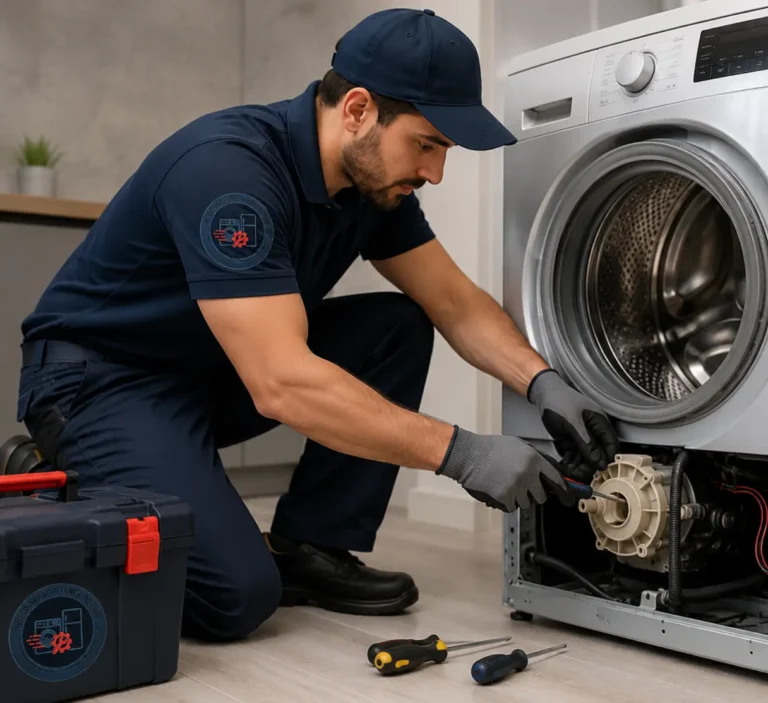
Owner checks: switch the machine off at the wall first. Locate the pump filter behind the small hatch at the front base, place a shallow tray and towels underneath, and slowly unscrew it to release the water. Clear any debris and check the drain hose is not kinked behind the machine.
Call a professional if the filter is clean but water still will not clear, as this usually points to a failed drain pump or a control-board fault.
Machine will not spin
A load that comes out soaking wet often means the spin cycle did not complete. Frequently this is simply an unbalanced load, where towels or a single heavy item bunch to one side and the machine refuses to spin for safety. It can also stem from a worn drive belt, worn motor carbon brushes, or an unresolved drain fault, since most machines will not spin until they have drained fully.
- Redistribute the load evenly and restart a spin cycle.
- Confirm the machine has drained completely first.
- Listen for the motor trying to turn without the drum moving, which can indicate a belt problem.
Belt, brush, and motor issues involve opening the cabinet and are best left to a technician.
Leaking water
Trace where the water appears before assuming the worst. Leaks from the front usually come from a damaged or mouldy door seal (gasket), while leaks at the back often come from loose or perished hose connections. A very common and easily fixed cause is detergent overdosing, which creates excess suds that escape the detergent drawer and seals.
Owner checks: inspect the rubber door seal for tears or trapped debris, check that the inlet and drain hose connections are hand-tight, and reduce your detergent dose, especially since detergent works more efficiently in the naturally warm water here. A persistent leak from the base of the tub or the pump housing needs professional attention.
Excessive noise and vibration
A machine that walks across the floor or bangs loudly during the spin is trying to tell you something. Loose or uneven levelling feet are the simplest cause, particularly on tiled floors common in UAE homes. A loud rumbling or grinding that gets worse over time usually signals worn drum bearings, while a rattling can point to a foreign object caught in the drum.
Owner checks: make sure the machine is level and the feet are locked, and confirm you removed the transit bolts if it was recently moved. Bearing and drum replacement is a major repair that should be quoted and carried out by a professional.
Machine will not fill with water
If the cycle starts but no water enters, first rule out the supply. A closed tap, a kinked inlet hose, or a clogged inlet-valve mesh filter are frequent causes. Abu Dhabi’s hard water accelerates limescale and sediment buildup on these small inlet filters. Low household water pressure can also prevent the valve from opening.
Owner checks: confirm the water tap is fully open, straighten the inlet hose, and gently clean the mesh filter where the hose meets the machine. If the supply is fine and the valve still does not open, the inlet valve or a pressure sensor may have failed.
Door will not open
Front-loaders keep the door locked whenever water is detected inside, so a door that will not release is often protecting you rather than broken. A failed door interlock or a pressure system that still thinks there is water in the drum can also lock it shut.
Owner checks: wait a few minutes after the cycle ends for the lock to release, run a short drain or spin cycle to clear any remaining water, and switch off at the wall for a minute to reset. Never force the door. If it stays locked with no water inside, the interlock likely needs replacing.
Understanding error codes
Most modern machines flash a code when a fault is detected. These codes usually map to a category such as drainage, water inlet, heating, or door lock, and the exact meaning varies by brand and model. Note the code and consult your user manual before assuming the worst. Turning the machine off at the wall for a minute clears many temporary faults, but a code that returns repeatedly indicates a real problem worth diagnosing.
Simple maintenance that prevents most faults
- Clean the pump filter every one to two months to prevent drainage problems.
- Wipe the door seal and detergent drawer regularly, and leave the door slightly ajar between washes so the drum dries out and mould does not form in the humid climate.
- Avoid overloading, which strains the bearings, motor, and seals.
- Run an occasional hot maintenance wash to counter detergent and limescale residue from hard water.
- Use the correct dose of detergent, never more.
If you have worked through the owner checks and the fault persists, or the repair means opening the cabinet, it is safer to bring in an experienced technician who can diagnose the issue and fit genuine or brand-matched parts. To book a qualified local team, see our washing machine repair service in Abu Dhabi and get your machine running smoothly again.